ObjectARX
-

There's a series of webinars starting next week that will help you get a grip on what's coming with various Autodesk platforms, both cloud-based and desktop. It's also a chance to catch up on some of the content that was presented at last year's DevCons. All the below webinars start at the same time: 8am PST | 11am EST | 4pm GMT | 5pm CET. Don't worry if that time's inconvenient, recordings will be made available soon after the webinars are finished. Please note that while some of the sessions (the last three in the below list) require Autodesk Developer…
-

Over the weekend I received an email from Jürgen Becker. It came with this image, which certainly brought back memories. The email referred to our recent trip down memory lane… I read your last post and remembered a poster. Do you remember that release, it was terrible? This is one of my favourite "chat over a beer" topics, and one that seems relevant to where we are today with Fabric, so I wrote Jürgen a quick note to say that I'd reply via my blog. Here is that reply. R13 was bad, but it had to happen I joined Autodesk…
-

The AutoCAD team is running their annual survey to better understand developers' needs relating to documentation. Access the survey here before the end of May. Lee Ambrosius provides more information over on his blog, including some interesting data-points from last year's survey as well as areas of the documentation that were influenced by it.
-

This series of posts is one I've been meaning to write since AutoCAD 2016 started shipping. Thankfully a number of other people have filled the void, in the meantime, so I've created an appendix of related posts that you can find at the bottom of each post in this series. The series is about how we're working to improve security inside AutoCAD, and what this means for application developers. Dieter's posts on Lynn's blog help explain some of the background to this work, much as I've posted here in the past, too. Perhaps the biggest security change in AutoCAD 2016…
-
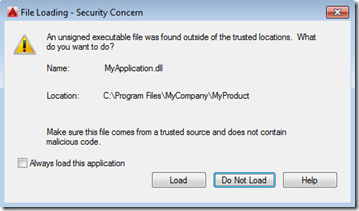
After our quick look at AutoCAD 2016 from a user perspective, let's now spend some time looking at the things important to developers in this latest release. Compatibility Off the bat it's worth stating that AutoCAD 2016 is a DWG compatible release: it's using the same file format as AutoCAD 2013, 2014 and 2015. It's also a binary application compatible release: ObjectARX apps written for AutoCAD 2015 should work in 2016 and it's likely that .NET apps built for AutoCAD 2014 will work, too. That said, some changes have been made to the security model for this release of AutoCAD,…
-
This is really cool. Fellow architect on the AutoCAD team, Jiri Kripac – who originally wrote AutoCAD's "AModeler" facet modeler and is the driving force behind AutoCAD's Associative Framework – has written a really interesting ObjectARX sample to perform an associative fillet between two curves. Given Jiri's background, this is as close to a canonical sample for implementing an operation using the Associative Framework – in this case by creating a custom AcDbAssocActionBody – as you're likely to find. Here's a video showing this custom fillet in action, and how it can be used with parameters and expressions to do…
-
The C++ developers among you may remember the autoexp.dat file, which tells older versions of Visual Studio how to visualize custom C++ types during a debug session. Here's an ancient post showing how we extended it for some basic ObjectARX types and another showing how to do so via a custom plug-in. In Visual Studio 2012, a newer XML-based mechanism was introduced to do something similar. In today's post we'll look at a custom .natvis file that exposes some basic ObjectARX types to the Visual Studio debugger. This file was created by Davis Augustine in response to a query from…
-

We've been getting some interesting responses back from the AutoCAD Security Survey that has been posted over on the AutoCAD Futures beta forum. (If you haven't already responded, we'd appreciate you taking the time to do so: it'll probably take you less time than reading the rest of this blog post. Then please come back and finish reading this, too. 😉 The survey is intended to gauge whether the safeguards we first introduced in AutoCAD 2013 SP1 (and then further enhanced with the SECURELOAD mechanism in AutoCAD 2014) are properly understood and considered valuable. From some of the feedback we've…
-

photo credit: Marcin Wichary via photopin cc As mentioned in the last post, fibers are now inactive in AutoCAD 2015 (the code paths are still there, largely for testing purposes, but should not need to be enabled for typical usage of the product). Fibers were a technology that Microsoft introduced way back when to help single document (and typically single-threaded) applications adapt more easily to the brave new world of MDI. At least that's my recollection and understanding. They were basically a mechanism by which applications such as AutoCAD could manage their per-document state, making the relevant data current depending…
-

Viru Aithal from the ADN team posted a link to this survey on the ADN DevBlog and asked that I post it here, too. The survey will help us determine your priorities for developer-oriented documentation, so we definitely appreciate the time you take to fill it out. [You might even find out about documentation resources of which you were previously unaware – there's quite a list in there.] My inbox is nearly back under control after my week of holiday, so I'll certainly be posting more during the course of the week. photo credit: splorp via photopin cc