May 2020
-
I have the sense that I'm seeing my face too much at the moment (admittedly I'm very attached to it… haha). All I can say, in my defence, is that over the last few weeks I've started to receive more requests to participate in virtual activities. And I've mostly said yes, as it's a reasonable alternative to travelling to meet people, given the current circumstances we're all in. In case you haven't seen these various pieces of virtual content – and you're actually interested – here's a quick round-up of some current and future ones. Getting Simple When my friend…
-
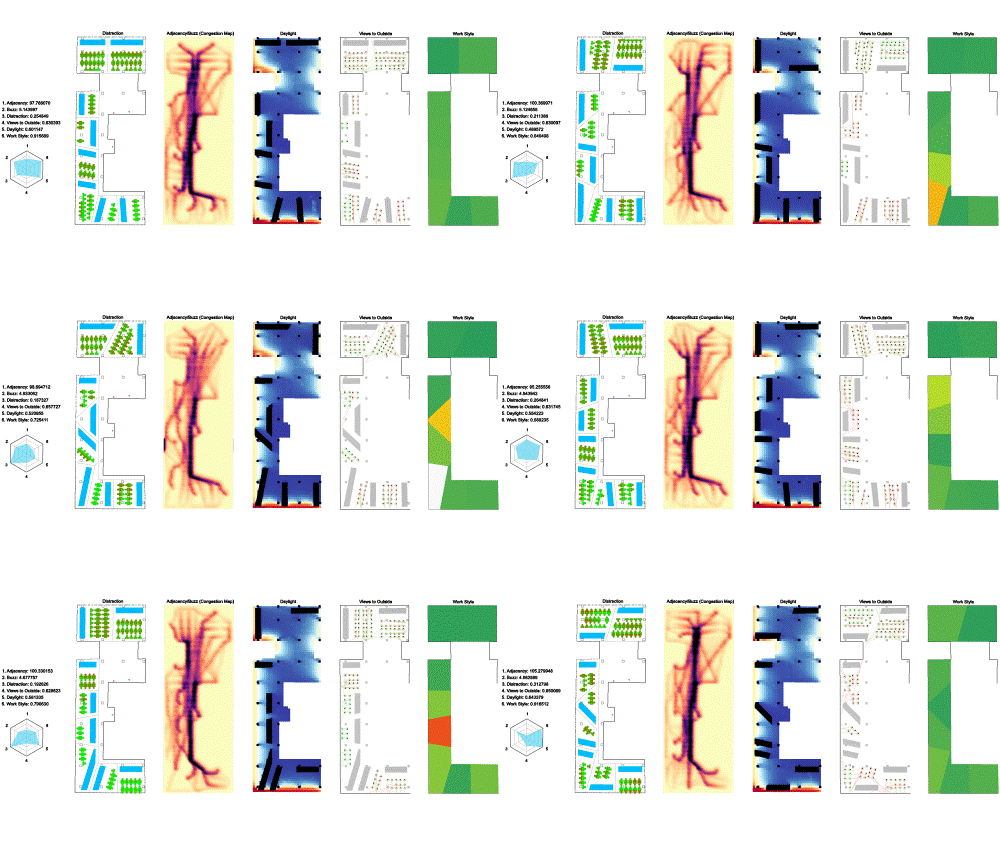
For the last few weeks I've once again been heads-down on Generative Design-related tasks after several months working almost exclusively on Dasher. I like switching context like this but it can certainly be a little disorientating, at first. Anyway, it's been really interesting working once again with my friends in the AEC Industry Futures team (the rockstars formerly known as The Living), and with Rhys Goldstein – the designer of the algorithms driving the Space Analysis package – on imagining a tool to help with post-COVID office layouts. Something I speculated about a little while ago, although that was before…
-
As a follow-up to the last post which talked about SimAUD and it's going online, today I wanted to mention some other online resources that might also be of interest to people during these times. The Institute of Technology in Architecture (ITA) at ETH Zurich is one of many institutions that have moved their public lectures online and have made them available for anyone to watch. So far I've watched a couple of them live, the second one being by my friend and former colleague, Matt Jezyk, who is now spearheading Tesla's efforts to streamline gigafactory design using techniques such…
-

Next week is the annual Symposium on Simulation for Architecture and Urban Design (SimAUD, pronounced Sim-Odd). This conference was started a decade ago by my former manager Azam Khan, along with Gabriel Wainer and Ramtin Attar. I've only had the pleasure of attending one SimAUD event – the 2018 edition was held in the Netherlands at TUDelft – but I was hoping/planning to attend this year's in Vienna: a paper submitted by Rhys Goldstein – with Simon Breslav , myself and Azam as co-presenters – was accepted for the conference. Here's a quick photo from a dinner we had in…
-
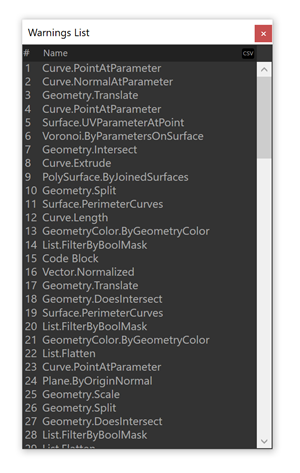
I've made some minor tweaks to a couple of my Dynamo packages, this week. One was to make sure Capturefinery – a tool that generates screenshots and animated GIFs for Refinery optimisation runs – works with the shipping release of Generative Design for Revit 2021 (it now does, but needed to look in a new directory structure). This is available from Capturefinery 0.9.11. The other was to add a feature to Warnamo – a tool that lists the warnings and errors in your Dynamo graph – to let you export the error list to Excel. This is available from Warnamo…
-

Yesterday Lisa Campbell, Autodesk's Chief Marketing Officer, announced the decision to move all this year's Autodesk University events to a fully digital platform: this makes a lot of sense given the ongoing uncertainty around the duration and impact of the COVID-19 pandemic. It's going to change the shape of AU for many of us, inevitably, but I'm looking forward to these events, nonetheless. For one thing it means I'm going to be able to attend – or even participate in – more of them, with less impact on my family and the planet. I'm also really curious to see how…
-
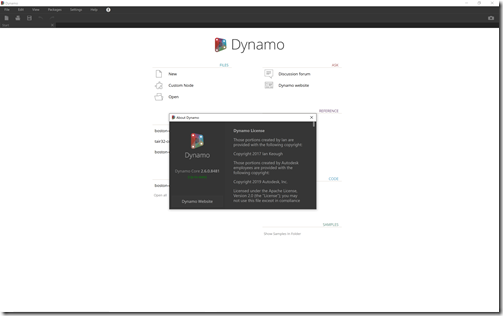
I've been banging pretty hard on Dynamo 2.6 – via Dynamo Sandbox – for the last few days, and I have to say I've been very impressed. Node renaming labels, code numbering, much improved PolyCurve performance… the combination of these various features have really helped with a project I'm working on right now (more on this next week). Congratulations to the Dynamo and Matterlab teams for this compelling update. So far it's really making a big difference. Check out Sol's blog post and head on over to DynamoBuilds.com to get the Sandbox build to try out!
-

No, that isn't a typo. As it's May the Fourth – yes, Star Wars Day – I thought I'd have a little fun and see what I could write using the venerable stack-based programming language, Forth. For those of you who aren't aware, Forth has a long history with Autodesk and , having been at the core of ATLAST, the Autodesk Threaded Language Application System Toolkit. ATLAST had noble intentions: to allow host applications to expose a common API or macro language that executed efficiently and with very low memory overhead. By the time I joined Autodesk it was unfortunately…